TFT Anti-Heal and Shred: When Your Board Needs Them, and Which Item to Build
TL;DR: Anti-heal pays most when the enemy’s healing is close to your damage, because healing comes straight off what you deal. In a hypothetical fight against a 4,000-Health target on 500 damage a second, Wound and 1% Burn cut the kill from 20 seconds to about 11.8 when it heals 300 a second, and only from 8 to about 7.4 when it doesn’t heal. Against light healing, 20% more damage does better. Shred and Sunder pay when one resist is high and most of your damage matches it. One source of each usually does the job, so scout before you spend a slot.
Worked examples are hypotheticals: sums, not records of real games. The resist formula here is a working rule, not Riot’s: no Riot page was found that prints it. The durability guide sets out what Riot has and hasn’t published. Numbers marked “game data files” were read November 4, 2026, from files not yet updated for 18.6, so your tooltip wins over any number here. Set 18’s own item entries in those files are blank, so item numbers come from the matching base entries. The itemization guide lists what each item does, and this page decides when you need one.
When does your board need anti-heal?
When the unit you can’t kill heals a large share of your damage. Healing comes straight off what you deal, so it matters most when the fight is already close to a stalemate.
Here’s a hypothetical target with 4,000 Health. Your board puts 500 damage a second on it after resists. Wound takes 33% off its healing, by the game’s keyword text, and 1% Burn adds 40 a second. The sums keep healing steady to stay simple:
| It heals, per second | Time to kill, no anti-heal | With Wound and 1% Burn | Faster by | With 20% more damage instead |
|---|---|---|---|---|
| 0 | 8.0 seconds | 7.4 seconds | 7% | 6.7 seconds |
| 100 | 10.0 seconds | 8.5 seconds | 15% | 8.0 seconds |
| 300 | 20.0 seconds | 11.8 seconds | 41% | 13.3 seconds |
| 450 | 80.0 seconds | 16.8 seconds | 79% | 26.7 seconds |
Read the last two columns together. At 100 healing a second, a plain damage item is still ahead. At 300 it isn’t. The lines cross at about 182 healing a second, or 36% of your damage. The share moves with your damage: about 20% if you deal 300 a second, and about 48% if you deal 1,000.
So the rule of thumb, on numbers like these, is this. If the target heals less than about a third of your damage, more damage is the better fix. If it heals more, anti-heal is.
These columns and that crossover count only the Wound and the Burn, or only the 20%. Each sum leaves out the rest of the item. Real items carry more, as the table below shows, so use the sum to choose the effect and then read the whole item.
Riot’s notes describe what heavy healing looks like in Set 18:
- A trait. Riot’s 18.5 notes say steady Flora Fatalis healing could stop big tanks’ Health bars from falling, and cut its max Health heal from 8% to 7%.
- An item. Its October 27 update says Hand of Justice was turning high-damage carries into tanks that drain, and cut its Omnivamp from 15% to 12%.
- A unit. Its 18.2 notes raised
 Maokai’s Mana from 30/90 to 30/100 to slow how often he casts and heals.
Is the Wound or the Burn doing the work?
Each second, Wound removes 33% of the target’s healing and 1% Burn deals 1% of its max Health. So Wound becomes the bigger half once the target heals more than about 3% of its max Health a second, since 1 divided by 33 is 3.03%.
On a 3,000-Health unit, Burn is 30 a second, and Wound matches it at about 91 healing a second. Below that, the Burn is doing most of the work. That’s why a Burn item can still earn its slot against a big tank that barely heals, and the durability guide prices that case against Sunder and Damage Amp.
Which anti-heal item should you build?
The one that reaches the healer. All three apply the same 33% Wound and 1% Burn, by the game data files. What differs is who they touch and what else they give:
| Item | Recipe | Who it reaches | How long it lasts | What else it gives |
|---|---|---|---|---|
 Sunfire Cape | 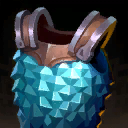 Chain Vest + 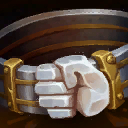 Giant’s Belt | One enemy within 2 hexes, every 2 seconds | 10 seconds | 150 Health, 8% max Health, 20 Armor |
 Morellonomicon | Giant’s Belt + 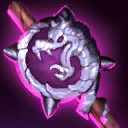 Needlessly Large Rod | Whatever the holder’s attacks and abilities hit | 10 seconds | 150 Health, 20 Ability Power, 1 Mana Regen |
 Red Buff |  Recurve Bow + Recurve Bow | Whatever the holder’s attacks and abilities hit | 5 seconds | 45% Attack Speed (15.4), 3% Damage Amp (14.20) |
Three calls follow from that table:
- The healer stands near your front. Sunfire Cape on your tank reaches it, and it’s the one of the three that adds tank stats. Its 10-second effect and 2-second timer mean at most 5 enemies carry it at once.
- The healer stands in the enemy backline. Your tank’s Sunfire may never touch it. Put Morellonomicon or Red Buff on a ranged unit that can hit it. Morellonomicon lasts twice as long, and Red Buff adds speed for attackers.
- You have no slot to spare for one fight. The game data files list a Wisp for this, Sunfire Sorcery, that Burns and Wounds enemies for 10 seconds at 2 gold. That’s file only, since no Riot note was found that mentions it. Infliction, at 4 gold since 18.2, Slows, Burns, Shreds and Sunders enemies for 8 seconds by the same files, but its text lists no Wound, so it won’t cut healing. The Wisps guide has the rules. Riot keeps moving Wisp prices, so check before you count on either.
A trait can do it for you. Riot’s Enchanted Wilds overview offers Inferno as the answer when you lack those items: its units’ damage Burns and Wounds. Its Burn has been 1/1/3/4% since 18.3. Inferno units come and go with the set, so check for the Wound on your units’ traits before you build an item for it.
Do you need more than one source?
For Wound, probably not. The keyword text gives one flat 33%, and no Riot page was found that says two sources add up. So the working reading is that a second source adds no more Wound. Riot’s 15.2 notes point the same way, calling a Sunfire Cape awkward once you already have Burn.
Burn is a little different. Riot’s overview and its Part I page say Inferno’s Burns stack with other Burn. No Riot page was found on whether two item Burns add together. So a second source can make sense for its Burn on an Inferno board, and should otherwise earn its slot on its other stats.
One catch: the base entry in the game data files gives Mittens, an artifact, immunity to Burn, Wound and Slow, and Riot’s 16.1 notes added the Burn and Wound part. Those files keep Mittens in Set 18’s item list, but they also keep things that have gone, and no Set 18 note was found that names it, so you may never meet one. If the healer does hold one, anti-heal won’t touch it. Read its items first.
When does your board need Shred or Sunder?
When one resist on the target is high and most of your damage matches it. Shred cuts Magic Resist, so magic damage gains. Sunder cuts Armor, so physical damage gains. The durability guide gives the one-target line: on the working rule that 100 of a resist halves damage, a 30% Sunder beats a flat 20% amp above 125 Armor.
Two things that sum leaves out change the call on a real board.
How much of your damage matches. Sunder does nothing for your magic damage, so scale its gain by your physical share. Same working rule:
| Target’s Armor | All your damage physical | 60% physical | 30% physical |
|---|---|---|---|
| 60 | +13% | +8% | +4% |
| 100 | +18% | +11% | +5% |
| 150 | +22% | +13% | +7% |
| 200 | +25% | +15% | +8% |
On a board split half and half, a 30% Sunder adds little against normal Armor. Check your damage chart after a fight before you build for it. Shred is the same sum with Magic Resist. Riot’s 15.7 notes made  Last Whisper apply from all attack and ability damage, so a magic carry can hold it, but it still only lowers Armor.
Who the amp would have helped. A 20% amp on your carry raises only your carry’s damage. Sunder raises all your physical damage on that target. On an all-physical board where your carry deals half the damage, the amp adds 10% to the board, and Sunder passes that at about 43 Armor rather than 125.
Here’s what the four items do, by the game data files:
| Item | Recipe | Effect | Who it reaches | What else it gives |
|---|---|---|---|---|
| Last Whisper | Recurve Bow + 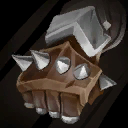 Sparring Gloves | 30% Sunder for 3 seconds | Whatever the holder hits | 15% AD, 20% Attack Speed, 20% crit chance |
 Evenshroud |  Negatron Cloak + Giant’s Belt | 30% Sunder | Enemies within 2 hexes of the holder | 250 Health, 20 Magic Resist, plus 15 Armor and Magic Resist that fade after 15 seconds |
 Void Staff | Recurve Bow +  Tear of the Goddess | 30% Shred for 5 seconds | Whatever the holder hits | 35 Ability Power, 15% Attack Speed, 1 Mana Regen |
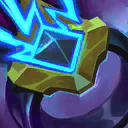 Ionic Spark | Needlessly Large Rod + Negatron Cloak | 30% Shred, plus magic damage when enemies cast | Enemies within 2 hexes of the holder | 250 Health, 35 Magic Resist, 15 Ability Power |
Pick by shape. Evenshroud and Ionic Spark go on a tank and cover the fight around it, so they stop helping once the holder dies or the fight moves away. That’s a reading of the 2-hex text, not a Riot line. Last Whisper and Void Staff go on a damage dealer and mark what it hits. Riot’s 15.2 notes also treat an Evenshroud as a poor fit on a magic board, which fits the table above.
Don’t build the same one twice. Void Staff’s and Last Whisper’s own text rules out stacking. Evenshroud and Ionic Spark don’t carry that line, and no Riot page was found on what happens when separate sources meet, so plan on one source of each and treat a second as a stat stick.
Check what your units already do. The game data files list several in Set 18: Caustic on  Kog’Maw (30% Shred and Sunder for 4 seconds),
 Kayle’s second Ascension (Shred),
 Xayah (Armor),
 Fiddlesticks and
 Pebbles (Magic Resist) and Mega
 Gnar (both). Riot’s overview, written before PBE, adds Coven
 Lux, at 20 Armor and Magic Resist. If one of them is already on your target, the item may be doing less than the table says.
What won’t Shred and Sunder fix?
Durability and sheer Health. On the working rules, they take a share of the resist and leave durability alone, so against a Juggernaut (6) unit, which has 42% durability on Riot’s 18.4 numbers, they do less than the Armor on its tooltip suggests. Burn and amp come back into it, and the durability guide has that table. No Riot page was found on how true damage meets durability.
The tank guide explains the other side of this: why a tank that stacks only one stat falls over to Sunder or Shred. The damage guide has the wider rule on filling the damage bucket you don’t have.
How do you read the lobby for this?
Look when it can change a decision: before you slam, and late in planning against your next opponent. The scouting guide has the routine. For this choice, you’re asking four questions:
- What keeps surviving your damage? Note the unit, not the comp.
- How does it stay alive? Healing items and Omnivamp point to Wound. A tall Armor or Magic Resist number points to Sunder or Shred. A big health bar with neither points to the durability guide’s table.
- Where does it stand? Near your front means an aura or Sunfire Cape can reach it. In the backline, it takes a ranged holder.
- How many boards show it? One board you’ll rarely meet isn’t worth a slot. Your next opponent, or the two or three boards you’ll have to beat to finish high, might be.
Then make the call:
| What you see | The call | Why |
|---|---|---|
| A front unit healing through your damage | Sunfire Cape on your tank | It reaches 2 hexes and adds tank stats |
| A backline unit healing through your damage | Morellonomicon or Red Buff on a ranged holder | Sunfire may never touch it |
| You already field Inferno | No second Wound source just for Wound | The keyword gives one flat figure, on the working reading above |
| High Armor, and most of your damage is physical | Sunder | +18% at 100 Armor on the working rule |
| High Magic Resist, and most of your damage is magic | Shred | The same sum on the other resist |
| Damage split between types, normal resists | Neither yet | +8% at 60 Armor on 60% physical |
| Heavy durability on a big tank | Read the durability guide’s table first | Sunder and Shred leave durability alone |
| Light healing and normal resists | A damage item | It’s ahead below about 182 healing a second in the sum above |
Who should hold it?
Fill the slot that costs you least. On a tank, these items take a place that a pure tank item could have had, and Riot’s 18.4 notes call  Crownguard its best tank item wherever a unit can build it and
 Spirit Visage its weakest. This guide doesn’t rank against that. It prices one effect, so use it to decide whether you need the effect at all.
On a damage dealer, the slot competes with your carry’s build. Of the 21 lines built from our own match crawl (patch 18.6 data), 4 list one of these items in the carry’s three-item build: Invoker 5 ( Morgana) has Morellonomicon and Void Staff, Hunter 3 (
 Ashe) has Red Buff and Last Whisper, and Flora Fatalis 2 (
 Ezreal) and Brawler 4 (Ezreal) have Last Whisper. The Shred and Sunder items match their carry’s damage type by the ability text. Those lines record only the carry’s items, so they don’t tell you what the tanks held.
If components are the question, the slamming guide has the sum for holding one, and TFTSense tells you what to slam and who should hold it.
What changes when Set 19 lands?
Riot’s schedule lists 19.1 for December 1, 2026, and warns that dates can change. The sums here don’t rest on a set: healing comes off your damage, a share of a resist pays more on a bigger resist, and a mismatched damage type gets nothing. Re-check the item numbers and recipes against the 19.1 notes, and the trait and unit examples above will need replacing. Riot’s November 2 dev post names a True Damage trait for Set 19, and the Set 19 page covers what Riot has shown. That’s a band and a trait, not the damage type.
Sources
All read November 4, 2026. No Riot page was found that prints the Armor or Magic Resist formula, how Wound or Burn from two items add up, or how Shred and Sunder from separate sources meet, so those sums are working rules and this guide’s own arithmetic.
- Riot Games, Enchanted Wilds Overview, published 2026-07-27, for Inferno, Burn and Coven Lux, and Teamfight Tactics, Enchanted Wilds: Part I, published 2026-08-26, for Inferno’s stacking.
- Riot Games, patch notes for 18.2 (2026-09-09), 18.3 (2026-09-22), 18.4 (2026-10-06) and 18.5 (2026-10-20, with the update of 2026-10-27), for Maokai, Infliction, Inferno, Juggernaut, Crownguard, Spirit Visage, Flora Fatalis and Hand of Justice. The 18.6 notes (2026-11-03) change none of them.
- Riot Games, patch notes for 14.20 (2024-10-08) and 15.4 (2025-09-09) for Red Buff, 15.2 (2025-08-12) for doubled-up Burn and Evenshroud on magic boards, 15.7 (2025-10-21) for Last Whisper, and 16.1 (2025-12-02) for Mittens.
- Riot Games, TFT Dev post, published 2026-11-02, and Patch Schedule, Teamfight Tactics, for Set 19.
- The game’s data files and keyword text, read November 4, 2026, in a version not yet updated for 18.6, for item recipes, effects and stats, Wound’s 33%, Mittens, the Sunfire Sorcery and Infliction Wisps, and the unit and trait effects listed. Set 18’s own item entries don’t carry numbers, so the figures come from the matching base item entries.
- Our own match crawl, for the 21 lines named (patch 18.6 data). No tier or rating is taken from them.
Frequently asked questions
When do you need anti-heal in TFT?
When the unit you can't kill heals a large share of your damage. Healing comes straight off your damage, so a hypothetical 4,000-Health target on 500 damage a second takes 10 seconds to kill if it heals 100 a second and 20 seconds if it heals 300. With Wound and 1% Burn those become about 8.5 and 11.8 seconds. Against light healing, a damage item does more.
How much does Wound reduce healing in TFT?
The game's keyword text says 33%. Riot's own Set 18 lines call it Wound without printing a number, and the game data files list 33% on Sunfire Cape, Morellonomicon, Red Buff and the Inferno trait. So a unit healing 300 a second keeps 201 of it.
Does Wound stack in TFT?
No Riot page was found that says two sources add up. The keyword text gives one flat figure, so the working reading is that a second source of Wound adds nothing. Riot says Inferno's Burn does stack with other Burn, so on an Inferno board a second source can still add Burn.
Shred or Sunder: which should you build in TFT?
The one that matches your damage. Shred cuts Magic Resist, so magic damage gains. Sunder cuts Armor, so physical damage gains. The game data files list 30% on Void Staff and Ionic Spark for Shred, and on Last Whisper and Evenshroud for Sunder. Check your damage chart first, since a mixed board gains much less.
Should you put Sunfire Cape or Evenshroud on your tank?
If your lobby calls for the effect and your tank has room, yes, since the game data files list their reach at 2 hexes, so they work near the front. Riot's 18.4 notes rate Crownguard above its other tank items wherever a unit can build it, and that is a judgment about whole items. This guide prices the effect, so use it to decide whether you need the effect at all.
How this guide was made: researched, drafted or edited with AI tools from MadeByKeo's notes, Riot's own sources and our own data. MadeByKeo decides what is published. How we make guides
Put this into practice
- Set 18 comps tier list: every live comp ranked by tier, with carries, items and the full board.
- TFTSense features: what the coach calls during a game, read from your screen.
- TFTSense compared with other TFT apps: Mobalytics, MetaTFT, TFT Academy, Blitz and more, feature by feature.
- Download TFTSense: the Windows installer.
Questions, or want a hand with your climb? Come hang out with us.
Join the Discord